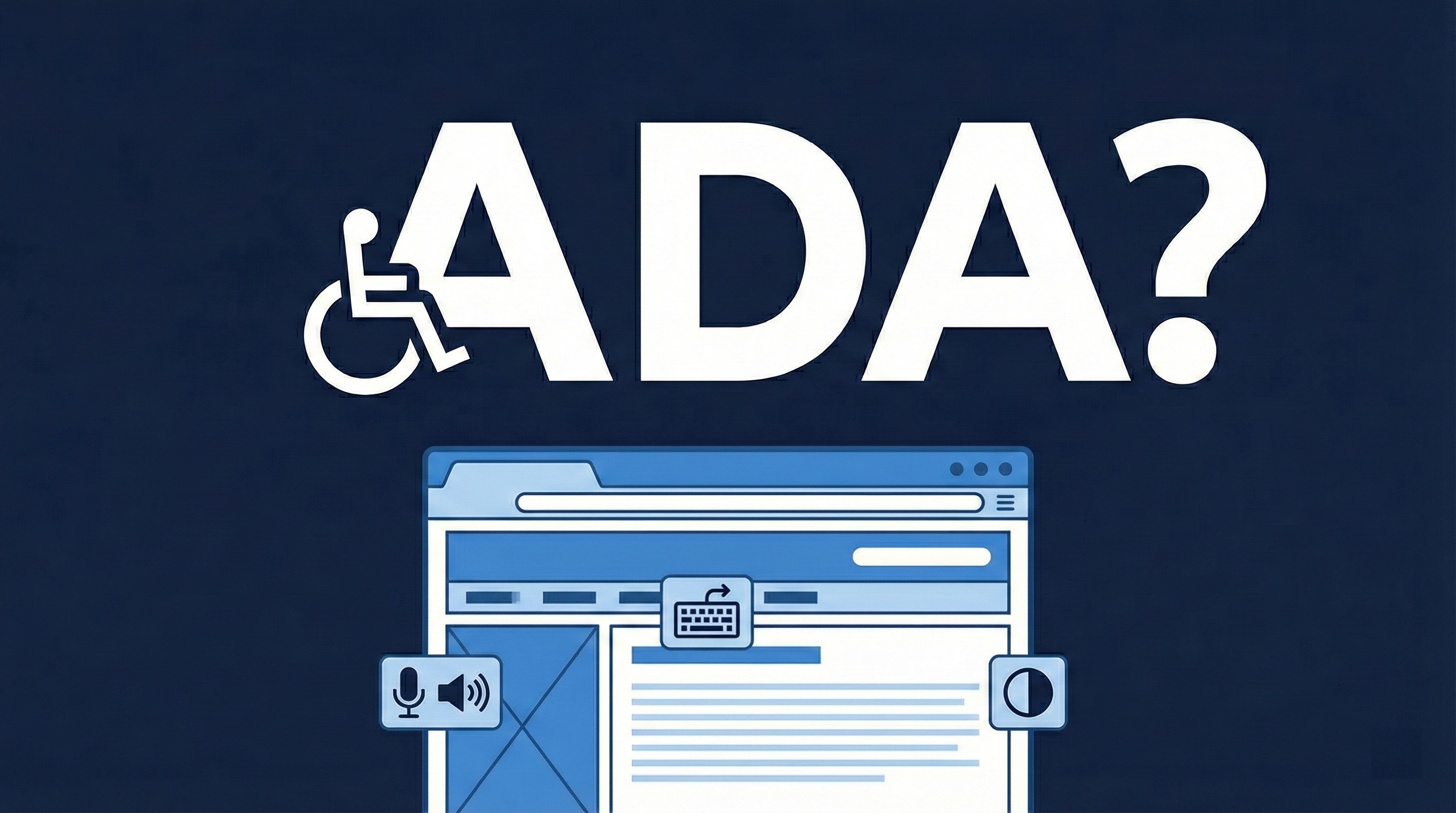
You keep hearing the phrase "ADA compliance" tossed around, but nobody ever pauses to explain what it actually is.
Here's the two-minute version, minus the legalese and the scare tactics.
What "ADA" Means
ADA stands for the Americans with Disabilities Act, a 1990 civil-rights law that says people with disabilities deserve the same access to everyday life as everyone else.
Originally it focused on physical spaces (think ramps, wide doorways, and Braille elevator buttons). Over time, courts and regulators agreed that "access" now includes the digital world: your website, online store, PDF menus, even your Instagram posts.
What "Compliance" Looks Like on a Website
Imagine a customer who is blind walking into your shop. You'd guide them to the shelf, describe the product, and let them pay independently.
An ADA-compliant website does the digital equivalent:
Perceivable – Every image has a short text label ("alt-text") so screen-reader software can describe it aloud.
Operable – The whole site works with only a keyboard; no mouse required.
Understandable – Forms label themselves clearly (no mystery boxes).
Robust – The code is tidy enough that assistive tech doesn't get confused.
These four ideas come from the Web Content Accessibility Guidelines (WCAG), an international cookbook web developers use to bake accessibility in from the start. Courts routinely point to WCAG 2.2 Level AA as the yardstick for ADA compliance, even though the ADA itself never mentions code.
Who Has to Care
If your business is open to the public (retail store, café, yoga studio, Etsy shop), you're a "public accommodation" under Title III of the ADA. That means both your front door and your home page should be welcoming.
Very tiny businesses may be exempt, but most mom-and-pop operations still fall under the law.
Why Should a Five-Person Shop Care?
More Customers, More Sales
Screen-reader users shop online at roughly the same rate as the general population, if the site lets them. A 2022 UK study found 78% of disabled shoppers walked away from an unusable site, taking $14 billion in lost sales with them. That's money left on the sidewalk.
Better SEO
Think of Google as the world's busiest, blindest shopper. It can't see your slick product photos or watch your promo video; it reads code the same way a screen reader does.
Better headings, descriptive link text, and alt-text on images very directly show up in higher SEO rankings, more organic traffic, and you didn't spend a dime on ads. You just made the site easier for everyone to use.
It Feels Right
Most of us got into business to solve problems, not create them. A single afternoon tweaking color contrast can be the difference between Mrs. Alvarez ordering her grandson's birthday cake herself or having to ask a neighbor to do it for her.
The Bottom Line
ADA compliance isn't a separate project tacked onto your website; it's simply good customer service translated into good code.
Build the habit once, and every future page, post, or product you add will automatically welcome more people (and more sales) through your (digital) door.